


The Nutri-Mark front-of-pack labelling (FOPL) system was approved by the Abu Dhabi Quality and Conformity Council (QCC) in 2025, making history as the first labelling system of its kind in the Middle East.
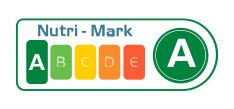
Nutri-Mark bears some similarity to other international FOPL nutritional labelling systems, such as Singapore’s Nutri-Grade and the United Kingdom’s Nutri-Score.
Similar to both of these, Nutri-Mark will employ a traffic light colour system together with alphabets to grade food products.
UAE’s Nutri-Mark labelling grades
Grade A: Highest nutritional quality, will be coloured dark green
Grade B: Light green
Grade C: Yellow
Grade D: Orange
Grade E: Lowest nutritional quality, will be coloured red
Nutritional quality for the Nutri-Mark scale is decided based on requirements for the various components: Fat content (total and saturated fats), carbohydrates and sugars, protein and fibre, salt content and calorie values.
This year, the QCC has taken the entire system a step forward by taking it digital.
“Consumers can now scan a Nutri-Mark QR code on products in four major retail chains across the UAE using the TAMM app, which is the official digital hub for Abu Dhabi government services,” QCC spokesman Abdullah Hassan Al Maeeni said.
“These four retailers play a very important role as they directly access a large consumer base across the region, which will give the Nutri-Mark label widespread visibility. Their strong influence will also encourage food firms to comply with this system by either voluntarily using the label or reformulating to get better grades.”
TAMM Executive Director of Customer Experience and Product Delivery Aisha Al Marzouqi added that this move is crucial as digitalisation and smart solutions are becoming increasingly important in the region. The agency has seen a rise in consumers shifting to digital solutions to access knowledge, so it is the ideal vehicle to spread nutritional awareness.
Voluntary reformulation
This system has not yet been made mandatory in the country, but as of 2026 some of the region’s largest food brands have already reformulated or launched products with better nutritional quality in order to attain better grades.
One of the largest dairy firms in the UAE Al Ain Farms has committed to reduce added sugars across various household staples.
“Flavoured milk, yoghurt and laban will be reformulated with 10% to 20% reduction in added sugars,” the firm stated.
“These updated lower-sugar products will be available on UAE shelves by September 2026.”
Nutri-Mark’s swift implementation
The rapid implementation of Nutri-Mark across the past year has clearly taken pages from other governments that utilised similar grading systems.
A clear example here is the government’s decision to immediately take all the usual nutritional components from fat to protein to sugar into consideration, in contrast to Singapore’s initial Nutri-Grade launch in 2022 which focused heavily on sugar content.
Despite successfully triggering companies to reformulate for lower-sugar options, this drew widespread concerns from the industry and academia about efficacy and impacts on the industry.
A second round of concerns made the rounds in 2024 after the government announced that Nutri-Grade would be expanded to consider sodium and fats by 2027, something that Abu Dhabi has avoided with the one-shot, all-encompassing implementation.
In a similar note, Nutri-Mark was also immediately rolled out across all food and beverage product formats in comparison with Nutri-Grade’s initial rollout for beverages only — the latter will be expanded to high-sodium and high-fat food categories in 2027, such as sauces, oils and instant noodles.


