


Functional beverages have traditionally focused on powering up the body. And this is still a thriving area.
Vitamin fortification helps with energy and immunity. Isotonic drinks help with hydration. Protein builds up muscle. Calcium supports bones. Collagen helps make skin more resilient.
But the latest frontier is the mind. How can our brains work more efficiently, more effectively and smoothly? How can we improve focus and concentration at work? And how can we relax at the end of the day?
And – most importantly – how can beverages help us do that?
Work smarter, not harder
Whether it’s a CEO in the office or a busy mum on the school run, we all want to be more productive in our roles and manage our time better.
Procrastination is the enemy: efficiency is the goal. A clear head and focused mind opens the doors to creativity and great ideas: fatigue makes basic admin tasks drag out for hours.
So the last few years have seen an increasing number of beverage brands focus their attention on the mind.
And while most of these brands are still relatively young, they’ve shown impressive growth.
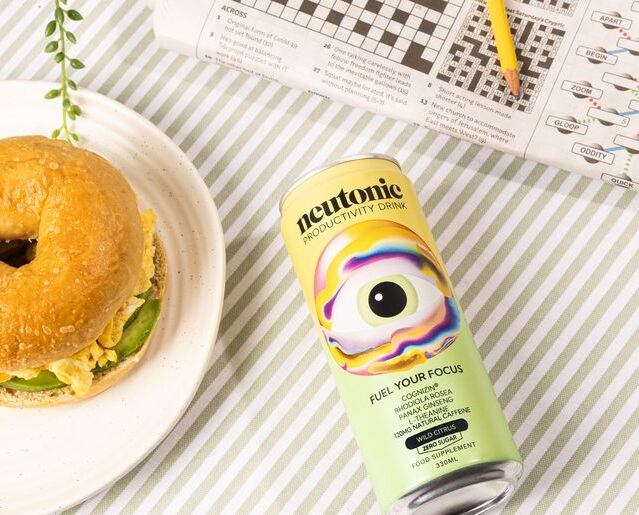
Take, for example, Neutonic: the nootropic drink that promises increased productivity and sharped focus. The brand, co-founded by British influencers James Smith and Chris Williamson, was valued at $20m within 18 months of launching: seeing superstar success in both the UK and US.
Neutonic’s ingredients include cognizin (which may support brain health by promoting ATP production); B vitamins (supporting energy yielding metabolism) and a blend of caffeine and l-theanine (this combination is being increasingly used to provide energy without the crash).
“I think that we’re now seeing a movement of people thinking more about brain health and brain function,” said co-founder James Smith, a personal trainer, entrepreneur and influencer.
“To us, productivity feels like the next fitness.”
The next generation of drinkers aren’t looking to alcohol to relax at the end of the day, or traditional sugar-laden energy drinks to power up their afternoons, he said. They’re looking for functional beverages with rewards.
“We’ve had this shift where people are saying: ‘my six-pack didn’t pay the bills, it didn’t alleviate the stress that my car finance is coming out in three days’,” said Smith.
“They’ve been having their energy drinks and smashing it in the gym, but now they’re saying: they need something to work harder, get more done.”
Neutonic is not alone in this new focus frontier. There’s also Bloom, with its sparkling energy drinks that support mood and promotes mental focus without the crash: thanks to L-theanine and ginseng.

And more and more brands are exploring this space: particularly where energy and focus can overlap.
Functional mushroom coffees, for example, often position themselves around the clarity and focus of mushrooms and the energy of coffee.
And relax...
But it’s not just about focus. On the other side of this drive towards productivity comes the need to rest and unwind at the end of the day.
It’s not a new need – herbal teas, for example, have embraced the natural properties of calming botanicals for years – but products are now being elevated to meet these needs.
Trip and Recess both started in the CBD arena: but have since expanded to a broader concept of relaxation.
Like Neutonic, Trip has seen spectacular success over the last couple of years: it’s the top-selling drink on TikTok with a host of celebrity backers and ambassadors.

Its Mindful Blend, launched in 2024, is formulated with lion’s mane (100mg), magnesium (120mg) and ashwagandha (100mg).
Recess, meanwhile, uses magnesium and adaptogens in its sparkling water, Recess Mood: with founder Ben Witte describing the brand as the ‘Red Bull for Relaxation’.

Alcohol-free alternatives
Relaxation is particularly important in the evenings. Consumers are reducing their alcohol intake, being increasingly conscious of the effect it has on their physical – and mental – health.
For some consumers it’s as simple as wanting to avoid a hangover and fuzzy brain the next day: but for others, it’s concerns over the negative effect alcohol consumption has on mental health (alcohol affects the chemistry of the brain, increasing the risk of depression, panic disorder and impulsive behaviour).
That opens the door for alcohol-free alternatives in beer, wine and spirits. But for other innovators, it’s about going further and offering the same concept of relaxation through functional ingredients, but without the alcohol.
Take, for example, Impossibrew: the alcohol-free beer with its proprietary alcohol alternative, designed to replicate the sensory and social relaxing experience of drinking with L-theanine, ashwagandha, thiamine and nootropics.

And beyond the traditional beer, wine and spirits analogues, there’s De Soi (reishi, mushroom, l-theanine) Kin Euphorics (ashwagandha, reishi, saffron) and Hiyo (adaptogens, nootropics, botanicals) to create drinks that help people unwind and relax.
For Hiyo, that’s about what it calls ‘the float’: a proprietary blend that includes ashwagandha, l-theanine, lion’s mane, lemon balm, passion flower and ginger) to create a light, mood boosting lift.

“It’s a subtle, relaxed feeling that supports presence without intoxication,” explains co-founder George Youmans.
“Most people don’t drink alcohol for the buzz: they drink it to feel relaxed, connected and present. Hiyo delivers those effects naturally through functional ingredients.”
Mood beverages
This idea of ‘mood beverages is one of the most interesting sub-segments of the functional beverage category.
It comes as consumers think beyond physical health and more about their mental state.
And with consumers increasingly skeptical of ‘big pharma’, the concept of ‘food as medicine’ remains strong: with people searching for natural remedies rather than strong pharmaceuticals with unwanted side effects.
Mood beverages
Mood beverages are up 42% in dollar growth, according to SPINS data. “As concerns in the general population about stress or sleep have become more prevalent, we’ve seen a huge rise in products that are including ingredients and positioning that help consumers relax,” said Ben Lerman, vice president of brand growth consulting at SPINS.
And while many of the benefits honed in on by brands are about the short term effects, there’s also a growing awareness of keeping the brain healthy and active as people live longer.
With an aging population, diseases such as Alzheimer’s and Parkinsons are an increasing concern, with consumers wanting to ensure healthy cognitive function into older age.
The brain will continue to be front-of-mind moving forward.
